As the clocks fall back and the autumn storms set in, we should consider how our buildings need to change with the weather.
In Britain we have always built with the cold in mind. Thick walls, small windows, insulation in the loft and a good boiler. Keep the heat in and the rain out. For many decades that has been enough.
But the weather has not only changed, but it’s also altered.
In July 2022 the UK recorded a temperature of over 40°C for the first time, and this year we have just lived through our hottest summer on record.
We saw 38°C in Norfolk in June, a new record for the month, and temperatures of 30°C or more on 40 separate days.
The Met Office has said a summer like this is now around 130 times more likely because of climate change.
Winters are getting wetter too, and storms seem to arrive with a new name every few weeks.
Our buildings were simply not designed for any of it.
The industry is being driven towards homes that use less energy but still have plenty of fresh air
Kirsty Hammond Publisher of Specifier Review
An overheated debate
More or less, a home built today will be lived in for 60 years or more. That means we are not designing for this year's weather, but rather designing for the weather our grandchildren will live with.
Our homes were traditionally designed to keep the heat in. Now we need them to let it out too. Overheating within our buildings is now one of the biggest issues facing the construction industry.
We have spent years making our homes airtight and well insulated, which is great news in January or February. In July it seems it's going to be a different story. The heat can get in our homes and then has nowhere to go.
Flats in our cities are often the worst affected. Typically, they have large windows facing the sun, rooms on one side of the building only and windows that cannot be opened safely, this all add up to very uncomfortable living.
However, it is about more than comfort. When nights stay warm our bodies can't recover properly. We sleep badly, we feel tired and irritable, we struggle to concentrate.
For older people, babies and anyone who is unwell, a long hot spell can be genuinely dangerous.
A cool idea
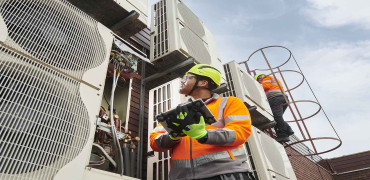
This is where heating, ventilation and air conditioning, or HVAC, has a big part to play.
Mechanical ventilation with heat recovery (MVHR) keeps fresh air moving around a home all year. In winter it holds on to the warmth, and many systems have a summer bypass, so cooler night air can flush out the heat of the day.
Air source heat pumps are already at the heart of the move away from gas boilers. Some can run in reverse and provide cooling as well, so one system can see a home through both seasons.
Before we all scrabble for the air conditioning units though, we should start with the building itself.
With an existing building, you can’t change the direction it faces. However, shading over the windows, external shutters and the simple act of letting air flow through from one side to the other can all make a huge difference.
Get that right first and any HVAC system will work less hard, use less energy and cost less to run!
Part O
It isn't only heat we need to think about. Heavy downpours are putting real pressure on our drains, and flooding is no longer something that only happens by the river.
Sustainable drainage systems, or SuDS, such as permeable paving, green roofs and rain gardens help slow the water down.
Inside, choosing materials that can be dried out and cleaned, and raising electrical sockets higher up the wall, means a home can be lived in again much sooner after a flood.
The regulations regarding these issues are starting to catch up. Approved Document O came into force in England in June 2022 and requires new homes to limit unwanted heat from the sun and to have a way of removing excess heat.
Designers can show they comply using a simplified method or through dynamic thermal modelling to CIBSE TM59.
Part F and Part L
Approved Document F deals with ventilation and Approved Document L with energy efficiency.
Between them they are pushing the industry towards homes that use less energy but still have plenty of fresh air.
For flooding, BS 85500 gives guidance on flood resistant and resilient construction, helping designers plan for water getting in and the clean up afterwards.
The trick is to look at all of these together, right at the start of a project, at design stage in fact.
Overheating, ventilation, energy and flooding all affect one another and a decision made for one will have a knock-on effect on the others.
So, it is true that our climate is changing faster than our buildings. The good news is we already have the products, the technology and the guidance to respond. It just ideally needs to be built into the design from day one.
We have always relied on our buildings to protect us from the weather. As the weather changes like the wind, so must they.
Kirsty Hammond is Publisher of Specifier Review