Credit where credit is due. The government has recently brought in the WARM HOMES PLAN, the FUTURE HOMES BUILDINGS STANDARDS (FHBS) and the BOILER UPGRADE SCHEME (BUS)
The Warm Homes Plan is a £15 billion initiative aimed at upgrading 5 million homes to cut energy bills and reduce fuel poverty. This provides support for lower-income households and social housing to install clean and green heating solutions, insulation and solar panels.
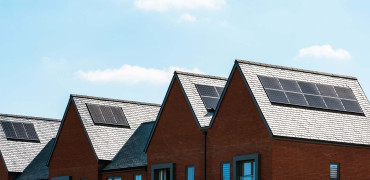
I’ve seen first-hand where several households in the area where I live in West London have already benefitted from direct grant funding and have installed solar panels and heat pumps. It has made a significant ecological difference to their homes.
The Future Homes Buildings Standards are a major sustainable update to England’s Building Regulations. They require all new homes and non-domestic buildings to produce 75-80% fewer carbon emissions compared to 2013 standards.
The new regulations come into force on 24th March 2027. The emissions targets in effect rule out fossil-fuel or gas boilers. Solar Photo-Voltaic panels must cover the equivalent of 40% of the dwelling’s ground floor area. The thermal performance regulations of walls, roofs and floors have been dramatically improved as well as the air tightness and ventilation requirements of our buildings.
These are massive and positive steps forward for our journey to net zero carbon.
The Boiler Upgrade Scheme is a government grant programme designed to help all property owners in England and Wales make the transition from Fossil Fuel Burning Heating Systems to low-carbon alternatives like heat pumps. The government will give you £7,500 towards to cost of your air source heat pump installation, which is fantastic.
Remember installing an air source heat pump into a new-build home is much cheaper than installing in an existing property, because the new system has been factored into the new home design with efficient benefits like underfloor heating throughout ground floor spaces. The government grant will significantly cover the cost of an ASHP install in an average size new-build home.
All new-build homes were meant to be carbon neutral by 2016
George Clarke TV presenter, architect, writer and Ecodan Ambassador
Speed and cost
My criticism of government though? All these initiatives have taken far too long. Way too long!
You must remember the Cameron/Osbourne government announced a ZERO CARBON HOMES policy that legislated to require all new-build homes should be carbon neutral by 2016.
In July 2015 Osbourne completely scrapped the policy arguing it would add excessive costs and slow down UK housebuilding.
The reality is this U-turn happened because of huge push back from the big and powerful house-builders and from the gas boiler industry, who were more concerned about making less profits and less dividends for shareholders than doing the right thing for our homes, the environment and improving the levels of comfort as well as reducing the energy bills for the people who worked and saved so hard to buy the homes.
I see this as us having lost 11 years due to the government not standing it’s ground and losing its bottle back in 2015 because of push-back from the home building industry.
The steps that government have taken recently should be commended, but as is so often the case with government it had taken too long to get here.
Where we are with legislation today is where we should have been 11 years ago and we know that the industry could afford it.
So, government need to move faster. There is no doubt about that.
Sparking the debate about price
But there is something else they need to address and that is the high cost of electricity.
We know we need to push for an electrified economy through wind, solar and nuclear and reduce our dependency on oil and gas, but government MUST ADDRESS what is becoming known as the ‘Spark Gap’. Electricity is more expensive than gas for 3 reasons.
- The wholesale price of electricity is dictated by THE MOST EXPENSIVE generation source required to meet demand, which is nearly always a gas-fired power plant. So gas sets the price of electricity most of the time
- Government policy costs to fund renewable energy schemes are disproportionately added to electricity bills rather than gas bills. Levies to fund green initiatives make up a larger percentage of your electricity bills rather than rather than your gas bill. That makes no sense to me at all!
- Then there are carbon taxes. Electricity is subject to carbon pricing (such as the UK Emissions Trading Scheme) which drives up production cost.
Surely, at the very least, the government need to make this a cost-level playing field between gas and electricity.
But it should go further, as well as faster!
In my view, if we know the way forward is for clean, green electricity to heat our homes and hot water, there is a strong argument that gas should be paying more in levies to fund green home initiatives than electricity does!
Homeowners need to pay less money for their electricity supply, and it is within the government’s power to address that.
Awareness
We need to do even more to educate the public and make them more aware of Air Source Heat Pumps. I never fail to be amazed by how much people fall in love with their air source heat pumps once they get rid of their old gas-guzzling boilers.
Every person I have ever met who have made the transition say how impressed they are by the technology and good it is to be off gas. I completely understand that people are often nervous about changing from one type of system to another but just look at the boom in electric cars!
There was so much cynicism about EV’s less than 10 years ago with a huge amount of criticism about the cost of the cars, concerns about batteries and range as well as the lack of electric charging points.
But that has all a changed now. The combination of amazing developments in the technology, increased driving range, prices of EV’s coming down, infrastructure being improved has led to an absolute revolution in the electric vehicle market.
It is time for the same green revolution to happen in the way we heat our homes. The industry is ready; we now need to bring the public along with us.
Trust
Trust in the UK home building industry is everything. We have to trust the designers and engineers who develop green building products, we must trust the manufacturers who make them, and we need to trust the developers, contractors and installers responsible for making them a fundamental part of our future homes.
It is so important that we decarbonise all of our buildings across the UK, but any significant changes to convention norms requires a leap of faith from all of us, and to make that leap of faith requires an enormous amount of trust.
And to gain trust you have to work hard to earn it.
I’m very proud to say that after years of hard work, innovation, investment and determination Mitsubishi Electric have been ranked first for:
- The UK's most trusted air source heat pump manufacturer
- An air source heat pump brand that you can rely on to do the job well
- An air source heat pump manufacturer that installers would recommend
- The market leader in air source heat pumps in the UK
- Manufacturing the highest quality air source heat pumps
- Providing industry-leading training
- Being the easiest air source heat pump to install
Installing faith
The study also found that Mitsubishi Electric was the most widely installed air source heat pump brand among installers surveyed and was the manufacturer most frequently selected as the brand they install most often.
In addition, Mitsubishi Electric emerged as the manufacturer most likely to be considered for future installations, reinforcing its position as a preferred partner for installers across the country.
This is a massive achievement for the entire company and all of its amazing staff. Congratulations everyone!
This reinforces even more why I’m enormously proud to be Mitsubishi Electric Ecodan’s Air Source Heat Pump Brand Ambassador. They are at the forefront of one of the biggest changes to home heating the country has ever seen.
We are pushing every single day to make our home across the UK more sustainable, more comfortable, more resilient to global energy markets and more affordable to heat and power.
The journey to net zero is happening and we’ll constantly push ourselves and our government to make it happen faster!
George Clarke is a TV presenter, architect, writer and Ecodan Ambassador