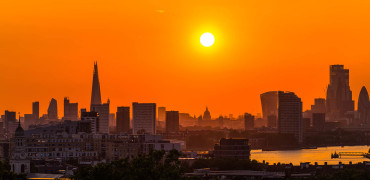
As the UK broke a long-standing June temperature record – on three consecutive days last week, I found myself thinking back to the summer of 1976.
I was nearly seven years old then, and my memories are not of climate graphs, atmospheric pressure patterns or national infrastructure resilience.
They are much simpler: hot pavements, dry grass, anxious adults, and the very practical reality of having to go out into the street to collect water from standpipes and bowsers.
For a child, it was unusual and memorable. For the adults around us, it must have been deeply worrying.
Once an exceptional childhood memory this is increasingly becoming a wider pattern of climate risk
Martin Fahey Head of Sustainability for Mitsubishi Electric
Collective memory
The summer of 1976 became part of the UK’s collective memory because of the combination of prolonged heat and severe drought.
The Met Office notes that from 23 June 1976, temperatures regularly exceeded 30°C across England, reaching 35.9°C at Cheltenham on 3 July, while the June temperature record of 35.6°C was recorded at Southampton.
The same summer also brought water shortages, standpipes in some communities, damaged crops, wildfires and emergency government measures.
What made 1976 so remarkable was not simply the peak temperature, but the persistence. It was a sustained period of heat, dryness and disruption.
The Royal Meteorological Society has described the 1975–76 drought as one of the most severe on record, with the dry period lasting 16 months and thousands of standpipes installed as water supplies came under pressure.
Serious lessons to be learnt
Fifty years on, the comparison is striking. The Met Office has now issued Red Extreme Heat Warnings for parts of England and Wales, with forecasts suggesting that the current UK June temperature record is very likely to be broken.
Temperatures are expected to reach at least 39°C in places, with high humidity and very warm nights increasing the health and infrastructure risks.
There is a temptation to treat heatwaves as nostalgic talking points — “remember 1976?” — but the lesson is far more serious.
What was once an exceptional childhood memory is increasingly becoming part of a wider pattern of climate risk.
The UK has already exceeded the absolute temperatures seen in 1976 several times, including the national record of 40.3°C at Coningsby in July 2022.
The issue now is not just whether records are broken, but how prepared we are for the consequences: for health, water resources, transport, buildings, agriculture and vulnerable communities.
Prolonged extreme heat
My memories of 1976 are all personal – carrying containers, queuing for water, and sensing that something unusual was happening.
Today, with better science, better forecasting and clearer evidence, we have less excuse to be surprised.
Extreme heat is no longer an abstract environmental issue. It is a resilience issue, a public health issue, an infrastructure issue and, ultimately, a leadership issue.
Perhaps the real memory of 1976 should not just be how hot it was, but how quickly everyday life can be affected when natural systems and built systems are pushed beyond what they were designed to handle.
Sources
Met Office, “Met Office marks 50 years since the legendary summer of 1976”;
Met Office, “Red Extreme Heat Warning issued with June temperature records forecast to break”;
Royal Meteorological Society, “Recalling the 1976 drought: 40 years on”;
The Conversation, “It’s 50 years since the 1976 drought: how would the UK cope with its next major one?”
Martin Fahey is Head of Sustainability for Mitsubishi Electric