As we move towards an electric economy, where fossil fuel heating is a thing of the past, one of the ‘barriers’ that is still seen to exist is the lack of heating engineers who can install renewable alternatives to gas heating.
However, the issue is not a lack of heating engineers as one of our directors has said: “There’s a heating engineer on almost every street – they’re just called a gas engineer at the moment!”.
So, the issue is getting gas and oil heating engineers to realise that we are now at the end of that era and helping them add to their existing knowledge and switch to renewable heating.
I saw how quickly the industry was beginning to move away from gas
Steve Clark Technical Trainer at Mitsubishi Electric
What are the barriers?
We covered the fact that there are more than enough heating engineers in our first Annual Heat Pump Report, which explored the things holding back growth in heat pump installations, especially as the Government will now give you £7,500 of basically free money to buy one.
There are still barriers to be overcome, but they relate to the costs of installation, the higher costs of manufacturing heat pumps, compared to more simpler gas boilers, the low number of qualified heat pump engineers, the lack of information available, and the outright disinformation in the public domain.
So, I thought I’d look at my own journey from gas to heat pumps.
Hopefully it can provide some guidance to any heating engineer out there who is still considering their future in the industry, or to anyone looking for a job that can’t be done by AI.
Mr ‘fix-it’
For me, I started out in plumbing and heating because I enjoyed practical work and solving problems. There’s a real satisfaction in fixing something that people rely on every day, especially when it comes to heating and hot water.
My early career was spent working on domestic plumbing and gas heating systems, mainly in social housing, where no two days were ever the same and you quickly learn how important good fault-finding skills are.
What pushed me toward low-carbon heating was seeing how quickly the industry was beginning to change.
It became clear that heat pumps and other low-carbon technologies were going to play a major role in the future of domestic heating, so I wanted to get ahead of the curve rather than wait to catch up later.
Why I became a heat pump trainer
A large part of my earlier work involved correcting issues that had not been right from day one, and that made me want to understand how to design an entire heating system properly rather than simply fix the outcome.
I’ve never liked relying purely on “rules of thumb” that had gradually become accepted as standard practice, so I completed the BPEC Heat Geek Mastery Course in my own time to gain a deeper understanding of heating system design, particularly hydronics and low-temperature systems.
That learning gave me a completely different perspective on heating — not just how to install equipment, but how to design systems so they perform efficiently in real homes.
And that for me, is one of the most important things about renewable heat pumps – they will work in almost any building, if they are designed, installed and commissioned correctly for that individual situation.
On or off the tools
The biggest change in becoming a trainer was moving from being on the tools to becoming office based. I had never worked in that kind of environment before, particularly not within a global company like Mitsubishi Electric, so it was a significant cultural shift.
The working conditions did improve considerably though because I was no longer spending so much time driving between jobs, and moving into regular office hours gave me a far better work-life balance compared with being on-call every week.
That was especially important because I had recently become a parent and wanted to spend as much time with my family as possible.
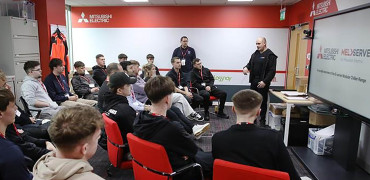
So, today I work as a Technical Trainer at Mitsubishi Electric, where I deliver training for installers, develop technical content and help engineers build confidence with heat pump systems.
A typical day might involve running a practical training session, answering technical questions from installers, or creating tools that make installations easier — such as wiring schematics, commissioning guides, and interactive learning resources.
A big part of my role is taking complex technical information and making it easier for engineers to apply in the real world. In many ways, I have gone from using tools to creating them.
Sharing knowledge
What I like most about the HVAC sector in general, is the willingness people have for sharing knowledge.
Low-carbon heating is still evolving, so there is a real sense that everyone is learning and improving together. Most people recognise that good installations are essential if the technology is going to succeed, so there is a shared focus on raising standards.
I think the biggest barrier to mass heat pump adoption in the UK is still the cost of electricity. Because electricity remains comparatively expensive against gas, a heat pump often needs to achieve around 400% efficiency just to compete with the running costs of a gas boiler.
The positive side of that challenge is that it has pushed UK installers to become highly skilled in low-temperature heating design, because that level of efficiency only comes from getting the whole system right — from heat loss calculations and emitter sizing through to pipework, controls and commissioning.
In many ways, that pressure has helped raise standards, because good system design is no longer optional; it is essential.
Tomorrow’s ‘green’ engineers
The Government has focused attention on creating the ‘green’ jobs of the future, but we cannot look solely on upskilling those already working in the industry, although that remains a major part of the solution.
Many experienced heating engineers already have highly transferable skills, but they need practical, accessible training that helps bridge the gap between traditional heating systems and low-carbon technologies.
The key is making that transition feel achievable by connecting new principles, such as low-temperature design and system optimisation, to knowledge they already have rather than making it feel like they are starting again from scratch.
At the same time, there also needs to be greater emphasis on bringing new entrants into the sector, particularly younger people, through more accessible apprenticeship opportunities.
I remember this being a challenge when I was starting out myself — larger firms would often tell me to approach smaller independent businesses, while smaller businesses would suggest speaking to the larger firms. That circular problem can make it difficult for people to get a first opportunity.
Apprenticeships are essential to securing the long-term future of the industry because they provide a structured route for developing both practical skills and technical understanding from the outset.
At a time when artificial intelligence is reshaping many professions, heating and low-carbon engineering still offer a highly resilient career path because they combine technical knowledge, problem-solving and practical ability in ways that remain difficult to automate.
So, if you are an existing heating engineer, please come and talk to us at Mitsubishi Electric, or look at the training courses we offer.
And if you are a parent looking at a sustainable and rewarding career for your children, get them to look at installing renewable heating. They won’t just be helping our society become more sustainable and energy secure, they’ll be helping to secure a brighter future for everyone.
I have another colleague whose cynical teenage daughter used to say to him: “Dad, dad, I can’t go to sleep. Tell me about heat pumps” and he would reply “Actually, I’m helping save the planet, one house at a time!”.
Steve Clark is a Technical Trainer at Mitsubishi Electric