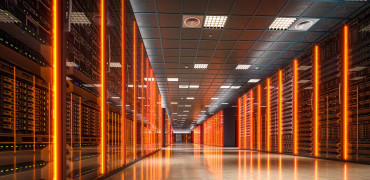
When people think about the data centre sector today, the image that often comes to mind is a vast hyperscale campus built specifically for artificial intelligence, cloud computing and high-density processing.
However, this focus on new construction can sometimes obscure another important part of the industry: the growing stock of legacy data centres already in operation.
In a sector where technology evolves quickly, “legacy” can refer to facilities that are surprisingly young. A data centre built less than a decade ago may now be facing challenges it was never originally designed to handle. Increasing rack densities, powerful GPU chips and the demands of AI workloads are pushing cooling infrastructure well beyond the parameters that were considered standard only a few years ago.
At the same time, the pressure on land and grid connections, particularly in areas around London and other major digital hubs, means that building new facilities is not always feasible. As a result, many operators are turning their attention to upgrading existing sites.
Upgrades can unlock additional IT load without the need for entirely new buildings
Shahid Rahman EMEA Data Centre Strategic Account Lead
Unlocking capacity in existing infrastructure
Many facilities still have significant untapped capacity within their mechanical and electrical infrastructure, meaning upgrades can unlock additional IT load without the need for entirely new buildings.
Upgrading an existing data centre often requires significantly less capital expenditure than developing a new site from scratch. It can also reduce embodied carbon by avoiding demolition and reconstruction, supporting wider sustainability objectives as the industry seeks to reduce whole-life carbon (WLC) across its infrastructure.
There are operational advantages too. Modernising legacy cooling and power systems can dramatically improve efficiency, helping operators reduce their Power Usage Effectiveness (PUE) and overall energy consumption. In a sector where cooling alone can account for a large proportion of electricity use, these improvements can deliver meaningful reductions in both operational costs and environmental impact.
Rising heat loads and the shift to hybrid cooling
One of the most significant challenges facing older data centres is the rapid increase in rack density.
Facilities designed around traditional enterprise workloads may have expected densities of just a few kilowatts per rack. Today, AI-focused computing environments can require significantly higher power densities, placing far greater demands on cooling infrastructure.
Air-based cooling systems still play a vital role in maintaining stable operating conditions across the data hall. However, the thermal demands of the latest high-performance processors mean that many operators are now exploring liquid cooling technologies as part of retrofit projects.
For many existing facilities, the most practical approach is not a complete shift from air to liquid cooling, but a hybrid model that combines the strengths of both systems. Air cooling continues to manage ambient conditions within the data hall, while liquid cooling is introduced to handle the highest heat loads at rack level.
The hybrid approach allows operators to support next-generation workloads without fundamentally redesigning the entire facility.
The complexity of upgrading live environments
Retrofitting cooling infrastructure within an operational data centre presents significant engineering challenges. Unlike many other building types, these facilities cannot simply be shut down while upgrades take place.
Cooling, power and monitoring systems must remain fully operational throughout the project to ensure continuous uptime for customers. This often requires careful planning, temporary infrastructure and phased installation strategies to minimise risk.
In addition, older sites can present logistical hurdles. Documentation may be incomplete, equipment may have been modified over time, and system layouts may not always reflect original design drawings. Engineers frequently need to carry out detailed investigations to fully understand how existing systems operate before designing upgrade solutions.
Despite these complexities, refurbishment is increasingly viewed as a strategic necessity rather than an optional improvement. As digital infrastructure continues to expand, extending the life and capability of existing facilities will play an important role in supporting the UK’s digital economy.
Supporting the transition to next-generation cooling
For designers, engineers and building operators planning these upgrades, selecting the right technologies is critical.
Solutions that enable flexible integration between air and liquid cooling systems are becoming particularly valuable as hybrid cooling strategies become more common. For example, Mitsubishi Electric recently introduced its ME-CDU coolant distribution unit (CDU), designed to support liquid cooling deployments within modern data centre environments.
Available in capacities from 750kW to 1.2MW, the unit is designed to integrate with hybrid cooling systems and support high-density server environments. With advanced monitoring capabilities and robust hydraulic design, systems such as this can help operators introduce liquid cooling in a controlled and efficient way when upgrading existing facilities.
A long-term strategy for digital infrastructure
As the UK moves towards an increasingly AI-enabled economy, demand for computing capacity will continue to rise. While new hyperscale facilities will remain an important part of the sector’s growth, upgrading legacy infrastructure will be equally critical.
By modernising cooling systems, improving efficiency and enabling higher rack densities, refurbishment projects allow operators to extract greater value from existing assets while supporting sustainability and decarbonisation goals.
With extensive experience across commercial HVAC applications and a growing portfolio of data centre cooling technologies, Mitsubishi Electric works with consultants, contractors and operators to help deliver these complex upgrade projects.
In a rapidly evolving digital landscape, the ability to adapt existing infrastructure may prove just as important as building the next generation of data centres.
Shahid Rahman is EMEA Data Centre Strategic Account Lead