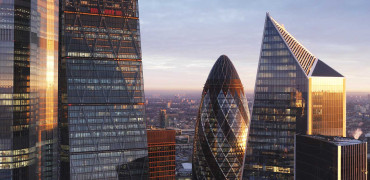
The UK’s build-to-rent (BtR) sector continues to expand at pace, with high-rise developments reshaping city skylines in London, Manchester, Birmingham and beyond.
The buildings are often high-rise, making the most of constrained urban land to deliver much-needed homes in areas of high demand.
The scale and position of these schemes means that they introduce a complex set of design challenges.
Among the most pressing is the need to manage overheating in increasingly dense, urban environments.
The reality of city-centre living means that opening windows is not a viable option
Mike Egan Business Development Manager
Increased risk of overheating
The introduction of Part O of the Building Regulations in 2022 marked a shift in how overheating is addressed in residential design.
Rather than treating overheating as a secondary comfort issue, the regulation places it firmly within the context of occupant health and wellbeing.
This reflects a wider recognition that the UK’s climate is changing, with hotter summers and more frequent heatwaves.
High-rise residential buildings often combine characteristics that increase overheating risk: compact apartments, large, glazed façades, single-aspect layouts and limited opportunities for cross-ventilation.
When set within dense urban areas, these risks are compounded by the urban heat island effect, where surrounding materials and infrastructure retain and re-radiate heat, keeping night-time temperatures elevated.
A clear hierarchy
Part O is clear in its hierarchy of approach. Designers are expected to prioritise passive measures first, limiting solar gains through shading, glazing design and building orientation, and removing excess heat through natural ventilation where possible.
Only when these measures are insufficient should mechanical systems be introduced.
In practice, however, many high-rise urban schemes quickly reach the limits of passive design.
The reality of city-centre living means that opening windows is not a viable option. External noise from transport infrastructure, air pollution, and concerns around safety at height and security on lower floors all influence whether occupants can realistically rely on natural ventilation.
Part O itself recognises that windows are likely to remain closed at night in noisy environments, undermining one of the primary passive cooling strategies.
This creates a tension at the heart of modern residential design. The same buildings that must minimise overheating are often those least able to rely on traditional passive approaches.
As a result, developers and designers are increasingly turning to mechanical solutions, not as a first choice, but as a pragmatic response to real-world constraints.
Heat recovery ventilation
Mechanical ventilation, particularly systems with heat recovery (MVHR), offers a controlled and predictable way to manage indoor temperatures while maintaining indoor air quality.
In high-rise residential developments, this approach provides a consistent baseline level of ventilation that does not depend on occupant behaviour or external conditions.
It also allows designers to address competing regulatory requirements, balancing Part O with Part F (ventilation) and Part E (acoustics) in a more integrated way.
However, ventilation alone is not always enough. As thermal modelling under CIBSE TM59 becomes more widely adopted (particularly in London and other locations denoted ‘high risk’ for overheating) design teams are gaining a more detailed understanding of how heat builds up within specific apartments.
This is especially important in single-aspect dwellings or those with high solar exposure, where peak temperatures can exceed acceptable limits even with good ventilation strategies in place.
This is where targeted cooling solutions are an important part of the Part O toolkit. Rather than relying on traditional, energy-intensive air conditioning, there is growing interest in more focused approaches that manage peak temperatures without undermining overall energy performance.
A very cool idea
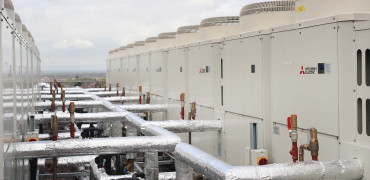
Mitsubishi Electric’s residential Lossnay MVHR system, when combined with its integrated cooling unit, is one such approach.
By introducing cooled supply air into the dwelling, the system can help to reduce indoor temperatures in a controlled and efficient way, without the need for external condensers or large-scale cooling infrastructure.
This makes it particularly well suited to high-rise applications where space, planning constraints and façade design are critical considerations.
A key advantage lies in its ability to support ‘pre-emptive cooling’ or ‘peak lopping.’ Rather than responding only when internal temperatures have already exceeded acceptable limits, the system operates earlier to moderate temperature rise.
By lowering peak temperatures, peak lopping reduces the overall cooling demand and helps maintain compliance with Part O thresholds more efficiently.
This approach aligns with the direction of travel in residential design. As Part O encourages greater use of dynamic thermal modelling, solutions are being selected based on their ability to respond to specific building conditions rather than applying a one-size-fits-all strategy.
The combination of mechanical ventilation and targeted cooling provides designers with a flexible toolkit to address the most challenging overheating scenarios.
Practical solutions
In the BtR sector, where operational models depend on occupancy rates and resident experience, ensuring comfortable living conditions is essential.
Poorly performing apartments that become too hot to sleep in can lead to complaints, increased occupant turnover and reputational risk, all of which undermine the financial case for investment.
But solutions must be practical to install, operate and maintain. Integrated solutions that combine ventilation and cooling within a single, compact system can help to simplify design and reduce installation complexity, while also supporting efficient operation once the building is occupied.
Delivering against Part O in the UK’s growing high rise residential sector is about recognising the realities of modern urban living. Passive design will always play a crucial role, but it cannot solve every challenge in isolation. As buildings become taller, denser and more complex, the need for well-considered mechanical strategies becomes increasingly clear.
By combining robust ventilation with targeted, efficient cooling, it is possible to create high-rise residential environments that not only comply with Part O, but also provide genuinely comfortable, healthy living spaces.
For developers, designers and operators alike, this represents an opportunity to move beyond minimum compliance and deliver buildings that are fit for our changing climate.
Mike Egan is Business Development Manager