As the historic mountain health resort readies itself for the annual get-together of global power and wealth, Jim McClelland asks: What makes Davos different, and sustainable?
Down your canapés, raise your glasses, and let the cowbells ring: It is Davos time again!
Over the course of one heavily expensed week in January, fleets of private jets will escort into ski-town a well-heeled who’s who of global politicos and the economic elite — coming together to warm one another’s cold hearts, amongst the ice and snow of the Swiss Alps.
One name due to appear on official flight logs for 2026 is that of President Donald Trump, billed as the star attraction at the Annual Meeting of the World Economic Forum (WEF).
Whether President Trump likes it or not, investors increasingly value society and science
Jim McClelland Sustainable futurist, editor, journalist and speaker
Trump tops the bill
To be grandstanding in the flesh actually marks something of a shift in stance on the part of the President, year-on-year. Citing concerns about ‘woke’ items on the agenda, he had opted merely to manifest on screen above the great, the good and the green in 2025.
In fact, being a big party-pooper has become the default RSVP for the United States of late — with a conspicuous no-show now the nation’s signature move on the summit stage.
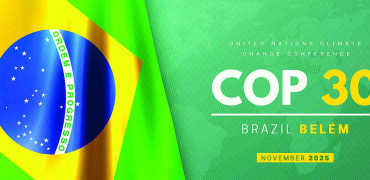
Nobody from the official US delegation attended the 30th meeting of the Conference of the Parties (COP30) in Belém, Brazil, last November.
Nobody will be crossing the Pond for the 12th plenary of the Intergovernmental Platform on Biodiversity and Ecosystem Services (IPBES12) happening this February in Manchester, England, either.
So, what makes Davos different?
Show me the money
Well, given the President’s election pledge to exit the Paris Agreement the moment he re-entered office for a second term, his COP30 stay-away was frankly never in doubt.
The “deeply disappointing news” of US withdrawal from all participation in IPBES12, though, was much less widely foreseen. The official statement made by the Platform Chair was issued as recently as last week, with less than a month to go before doors open.
The reasoning is hardly rocket science, however. In fact, science is part of the problem.
COP and IPBES aim to negotiate global agreement and a plan of action on climate and biodiversity, respectively. So, nothing about either science-led event appears a natural fit for the political agenda, business interests and personal ambitions of Donald Trump.
By contrast, Davos is all about money; and when money talks, the President listens.
Sustainability on the agenda
A good look at the agenda, however, shows money moves in mysterious ways — some of them sustainable, as can be seen from the five main themes under discussion in 2026:
- How can we cooperate in a more contested world? Rising fragmentation, accelerating complexity and rapid technological change mean collaboration is needed.
- How can we unlock new sources of growth? Innovation and technology, human capital and global integration can help both advanced and emerging economies grow.
- How can we better invest in people? Improving resilience of workforces worldwide is vital, and calls for reskilling, upskilling, job creation and workforce preparedness.
- How can we deploy innovation at scale and responsibly? AI, quantum computing and synthetic biology will inevitably drive real change, not least in future energy needs.
- How can we build prosperity within planetary boundaries? Circular, regenerative and inclusive investment can enable the environment and economy to go hand in hand.
Whether President Trump likes it or not, investors increasingly value society and science.
Put a price on Nature
So, funding for clean energy continues to make progress, with global solar and wind installations exceeding 800GW last year, according to estimates from BloombergNEF.
In venture capital, too, reports of the death of climate tech were greatly exaggerated, as the sector proved staunchly resilient through 2025 in the face of White House hostility.
Davos itself also recognises both the economic risks and flip-side enterprise opportunities of ecological impacts such as biodiversity loss. The WEF’s own research suggests that transitioning to nature-positive business models could unlock $10 trillion annually by 2030.
Putting a price on nature in this fashion upsets some purists, but it is arguably the only way to make the business case to bottom-liners of a more commercial, transactional mindset.
In other words, it is vital to speak to a Davos audience in language they understand. More than that, it is critical that the sustainability community makes itself heard there, full stop.
Stand up; speak up; show up
This is why the world’s largest media platform for climate action We Don’t Have Time has upped its pre-Davos messaging in a bid to rally the troops and attract attendee attention.
Referencing a rumour that President Trump has insisted on no climate discussions as a precondition for his appearance, the campaigning organisation is urging interested professionals, activists and influencers to be especially visible and vocal around Davos.
In short, the real New Year’s resolution for the global sustainability community right now seems to be this:
Ask not what Davos can do for you — ask what you can do for Davos.
Jim McClelland is a sustainable futurist, editor, journalist and speaker