I’ve been involved in Facilities for quite a while now and I love the variety that the job offers but sometimes it can become a bit more challenging than others.
I’m based at Mitsubishi Electric’s Hatfield headquarters although we are responsible for all the company’s offices across the country, from Livingston in Scotland to Bristol in the Southwest, from Manchester and Birmingham to Central London and Reigate.
This was new to the building, to me, to the engineers fitting it, and even the product managers
Rene Valladares Assistant Facilities Manager at Mitsubishi Electric
A new installation
You would think that working for an air conditioning manufacturer would mean that our headquarters office would be bastion of calm, comfortable climate control, and most of the time you’d be right.
After all, Facilities just want heating and cooling that works quietly and reliably in the background so that we reduce any queries about being ‘too hot’ or ‘too cold’.
However, being the headquarters also means that our building is sometimes used as a test bed, which can make the role of FM slightly challenging, to say the least.
And this was exactly the case when I was asked to co-ordinate the introduction of a new air conditioning system into part of our ground floor sales office.
This meant I also had to become familiar with HVAC (or Heating, Ventilation and Air Conditioning to anyone unfamiliar with the term), which is not an issue for me as I love to learn on the job and do believe that every day is a school day!
R32 YXM VRF
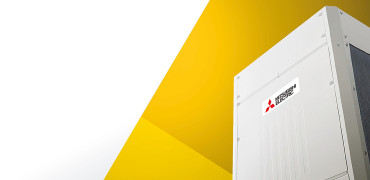
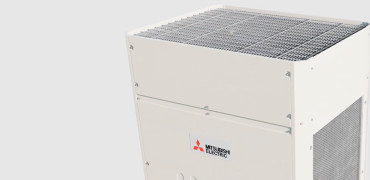
The new air conditioning system in question is called the City Multi R32 YXM VRF system which Mitsubishi Electric has just introduced to the UK market, and this was to be the first installation in the country.
So, not only was it new to the building (and to me), but it was also new to the engineers fitting it, and even the product managers responsible for bringing it to the market.
Thankfully, the new model is a continuation of the popular City Multi range of air conditioning so, while the outdoor compressor has been redesigned, the internal units and the connections were very familiar.
This included Mitsubishi Electric’s unique two-pipe system, as opposed to an industry standard for VRF (Variable Refrigerant Flow) of three-pipes, which makes designing the system easier and requires fewer brazing points connecting the copper pipes between the outdoor unit and the indoor ones.
Positioning the outdoor
One of the first things we had to arrange was the delivery of the outdoor unit and a suitable Hiab to lift it into position.
This of course meant securing parts of the car park, and rearranging postal deliveries for the morning, but thankfully, the unit was installed on the ground, so that customers and engineers on training can come and see the new unit when they visit Hatfield.
So, there was no need for expensive cranes up to the rooftop, which is often where the outdoor air conditioning units are sited.
The box sitting outside (the compressor) takes energy from the outdoor air and then feeds heating or cooling into ten ducted indoor units, which are concealed in the ceiling above the sales office that was having the new system.
Staffing schedule
It’s always easier to install new equipment when an office is empty but working on ceilings when there are people at their desks is simply not possible.
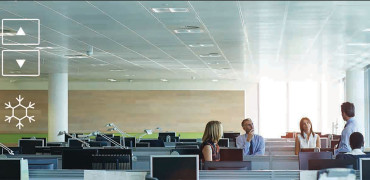
So, the next thing to arrange with our People Team, our IT department and the managers of the sales office in question was what to do with the 30+ people who would be affected by the work in the office.
Once a schedule for the works had been discussed and arranged, and staff relocated during the process, the rest of the installation was quite straightforward, if a little noisy at times!
One other thing about the new system is that the R32 element refers to the type of refrigerant that is being used with R32 having much lower levels of GWP (Global Warming Potential) than many existing refrigerants, so it is much better in helping combat climate change.
R32 though is classified as a mildly flammable refrigerant, so extra precautions are needed when designing and installing these systems, including leak detection systems.
Then it was a question of connecting everything to the unit’s control system and tying that to the buildings overall management system, before turning it on and adjusting the set points, temperatures, fan speeds and operating schedules.
Full of innovation
My colleagues in product marketing tell me that this new system is full of design innovation including a patented Vertical Flat Tube (VFT) heat exchanger, market-leading low noise levels, and new defrost technology, which should deliver a 20% reduction in both running costs and operational carbon against the previous model, and a 10% improvement in energy efficiency.
For me and my colleagues in Facilities though, what we want is reliability and a system that will automatically adjust to the local weather and deliver the comfort levels our colleagues need, in the most energy efficient way possible.
The next step is to monitor the system’s performance and compare it with the air conditioning from the other end of the large, open plan office. I will also be monitoring the reaction of colleagues working at either ends of the office to compare it from a facilities management point of view.
I hope to be able to report back later in the year when we’ve been through both cold and hot spells, so watch this space!
Rene Valladares is Assistant Facilities Manager at Mitsubishi Electric